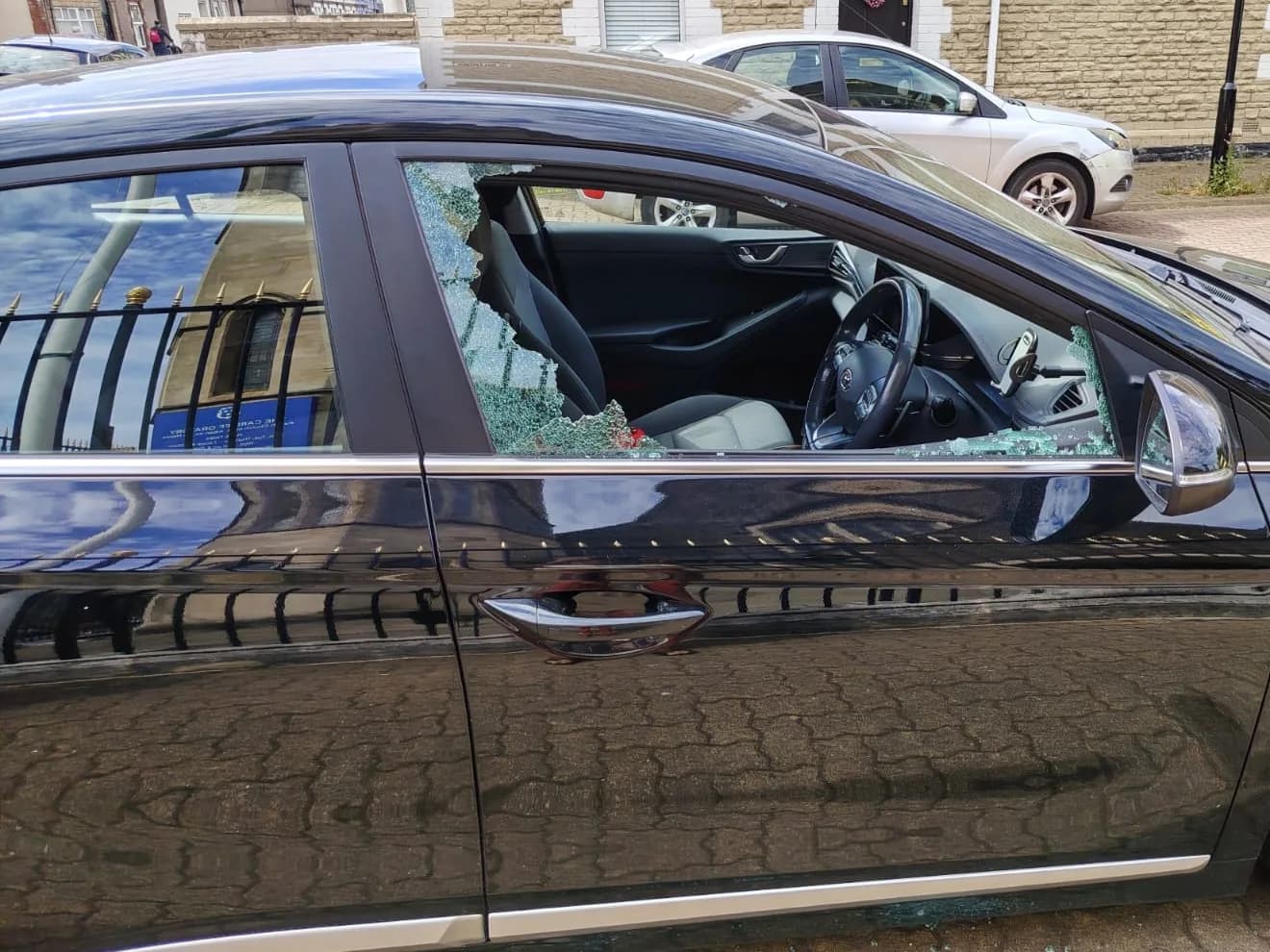
Smashed side window
Tempered side glass shatters into fragments when broken — whether through impact, attempted theft or stress. The door must be cleared of every fragment, including inside the door cavity, before the replacement glass is fitted.
Side Door Glass
Modern side windows are far more than simply glass.
Door glass may be laminated or tempered, tinted or acoustic, and it moves within a regulator mechanism that includes anti-pinch safety systems. It also forms part of the vehicle's security and weather sealing. Horizon replaces side door glass across Cardiff and South Wales to the correct specification — with the window mechanism, electronics and seals checked before the vehicle is returned.
Why It Matters
Side glass is the most common point of entry in vehicle break-ins. Glass fitted to the correct specification — particularly where the manufacturer specified laminated glass — restores the level of security the vehicle was designed with.
Door glass runs within channels and seals that keep water and wind out of the cabin. Worn, displaced or damaged seals — or glass that doesn't sit correctly within them — lead to leaks and wind noise that only get worse with time.
The glass must move smoothly through its full travel, seat correctly at the top of the frame and hold its position. That depends on the glass being the right part, clamped correctly and running true in its channels.
The window regulator raises and lowers the glass. If the glass is clamped out of alignment, the regulator is placed under uneven load — causing noisy operation, premature wear and eventual failure of the mechanism.
One-touch windows use anti-pinch sensing to stop and reverse if they meet resistance. After glass or regulator work, many vehicles require the window's travel limits to be re-learned so this safety function continues to operate correctly.
Many vehicles use acoustic door glass with a sound-damping interlayer to reduce road and wind noise. Replacing it with standard glass makes the cabin noticeably louder — the correct specification preserves the vehicle's refinement.
Factory privacy glass is tinted within the glass itself, not filmed. A replacement must match the original tint level so the vehicle looks right, remains consistent side-to-side and stays within the specification it left the factory with.
Door glass varies by construction, thickness, tint, acoustic layering and fittings. Identifying the exact original specification before work begins is what ensures every one of the above — security, sealing, operation and refinement — is preserved.
When It’s Needed
Tempered side glass shatters into fragments when broken — whether through impact, attempted theft or stress. The door must be cleared of every fragment, including inside the door cavity, before the replacement glass is fitted.
Laminated side glass cracks rather than shatters. Once the glass or its interlayer is damaged, its security and acoustic performance are compromised and the panel requires replacement with glass of the same construction.
Glass clamped out of alignment, seals seated incorrectly or the wrong part fitted altogether — poor previous work causes noise, leaks and regulator strain, and is corrected by removing the glass and refitting properly.
A failing regulator can drop, twist or crack the glass it carries. Where the mechanism has damaged the glass, both need attention — we inspect the regulator during every replacement and advise honestly on its condition.
After a break-in or attempted theft, the glass, the door seals and sometimes the lock and trim can all carry damage. We assess the full extent, replace the glass to specification and identify anything else that needs attention.
Glass that doesn't match the vehicle — wrong tint, wrong construction, missing acoustic layer — may need replacing to restore the intended security, refinement and appearance, even where it is physically intact.
Our Process
Glass Specification
Tempered glass shatters safely into fragments; laminated glass holds together around an interlayer, resisting break-ins and damping noise. Vehicles are designed around one or the other for each position — the replacement must match the original construction.
Factory privacy glass carries its tint within the glass itself. We identify the original tint level and source glass that matches it, so the replacement is indistinguishable from the panel it replaces.
Acoustic door glass uses a sound-damping construction to reduce road and wind noise in the cabin. Where the vehicle was specified with it, we fit acoustic glass — standard glass in its place makes the vehicle audibly louder.
Legal and factory tint levels vary by glass position, and side glass must remain consistent with the rest of the vehicle. We match the original tint specification rather than approximating it.
Some side and quarter glass carries heating elements or antenna connections. Where the original glass includes electrical features, the replacement must carry the same provision — and the connections are remade and tested.
Thickness, curvature, fittings, coatings and markings all form part of the original specification. We confirm the exact part for the vehicle before work begins, so the glass fits, runs and performs as the manufacturer intended.
Vehicle Systems
The window regulator carries the glass through its full travel, driven by a motor that monitors position and load. One-touch windows add anti-pinch sensing, which stops and reverses the glass if it meets an obstruction. These systems depend on the glass being clamped in exactly the right position — and on many vehicles, the window's travel limits must be re-learned after glass or regulator work for one-touch and anti-pinch functions to operate correctly.
Comfort closing — where the windows close from the key or door handle — relies on the same calibration. We test window operation, one-touch travel and anti-pinch behaviour before any vehicle is returned.
The door contains central locking components, and on many vehicles the alarm system monitors the cabin through sensors that broken glass or an open aperture can affect. Replacing side glass restores the sealed, secure cabin the alarm and locking systems are designed around — and we confirm the locking system operates correctly once the trim is refitted.
Modern door trims carry switch packs, speaker wiring, mirror adjustment and folding circuits, and in many vehicles side airbag components or sensors. Removing and refitting a door trim is careful work: connectors must be released and remade correctly, clips replaced where the manufacturer specifies, and nothing strained or trapped behind the panel.
We disconnect the door electronics before glass removal, reconnect them once the new glass is fitted, and test every function — windows, mirrors, locking and switches — as part of the final inspection.
Common Issues
Glass that doesn't seat fully against its seals at speed creates persistent wind noise. Correct alignment through the full travel of the window prevents it from the outset.
Displaced or damaged run channels and seals let water track into the door and cabin. Every seal is checked and reseated as part of a proper installation.
Glass clamped out of position sits proud, drops short or tilts in the frame. It may still move — but it won't seal, and it loads the regulator unevenly every time it operates.
Door trims are held by single-use clips on many vehicles. Rushed removal snaps them, leaving trims loose and rattling. Clips are replaced where the manufacturer specifies.
Forcing glass into a regulator, or running a misaligned window repeatedly, damages the mechanism. The regulator is inspected before the new glass is fitted and after it is aligned.
Fragments left in the run channels after a breakage scratch the new glass every time the window moves. The door cavity and channels are cleared completely before installation.
Connectors left loose, strained or trapped behind the trim cause intermittent window, mirror, speaker or locking faults. Every circuit is reconnected properly and tested.
Replacement glass that doesn't match the vehicle's tint is immediately visible and permanently wrong. Matching the original specification avoids a mismatched panel.
Who We Support
From private cars to vans and commercial vehicles. Bodyshops, fleets and insurers can work with us through Horizon Trade — and where the fixed panel behind the door is damaged too, see rear quarter glass.
Front and rear door glass for hatchbacks, saloons, estates and SUVs — laminated or tempered, tinted, acoustic or heated, fitted to the specification the vehicle left the factory with.
Cab door glass and glazed side panels for panel vans and conversions, with the correct construction for the vehicle and downtime kept to a minimum for working vehicles.
Side glass replacement for fleet operators with consistent standards across every vehicle and clear documentation of the work for fleet records.
Side window replacement through insurance claims — often covered under the glass clause of a comprehensive policy — with specification confirmed and the work documented to the standard insurers require.
Door glass removal and refitting in support of bodyshop repair work, including trim handling, regulator checks and correct reinstallation as part of the wider repair.
Prestige vehicles commonly carry laminated, acoustic and double-glazed door glass with specific coatings. We source glass to the original specification and handle these vehicles with appropriate care.
Horizon Insight
Quick Guide
Laminated side glass is becoming increasingly common, particularly on premium vehicles and front doors. Manufacturers fit it for security — laminated glass resists break-in attempts far longer than tempered glass — and for acoustic comfort, because the interlayer damps road and wind noise. A vehicle specified with laminated door glass should be reglazed with laminated door glass; substituting tempered glass changes how the vehicle protects its occupants and contents.
The glass is also only one part of a working door. Behind the trim sits the window regulator, the motor, the anti-pinch sensing, central locking components and often airbag and mirror wiring. Replacing door glass properly means working around these systems carefully, reconnecting them correctly and confirming they operate as intended — including resetting the window's anti-pinch calibration where the vehicle requires it.
This is why specification and installation both matter. The correct glass — laminated or tempered, the right tint, the right acoustic construction — fitted with the regulator aligned, the electronics tested and the seals seated, returns the door to exactly how the manufacturer designed it. Anything less leaves noise, leaks or faults that surface later.
Your Questions
Generally, no. Unlike a windscreen — where a small chip can be filled with resin — laminated side glass that has cracked or been broken through has lost its structural and security performance, and the panel is replaced rather than repaired. The replacement should be laminated glass of the same specification, not a tempered substitute.
Yes. Factory privacy glass carries its tint within the glass itself rather than as an applied film. We identify the original tint level for your vehicle and source replacement glass that matches it, so the new panel is consistent with the rest of the vehicle.
Yes. The glass is clamped and aligned to the regulator correctly, the wiring is reconnected, and window operation is tested through its full travel — including one-touch functions — before the vehicle is returned.
Yes, on many vehicles. Anti-pinch and one-touch functions rely on the window's learned travel limits, and after glass or regulator work these often need to be re-initialised — typically through a specific reset procedure. We carry this out and test the anti-pinch behaviour as part of every replacement where the vehicle requires it.
Yes. We replace cab door glass and glazed side panels on panel vans and conversions across South Wales, using the correct construction for the vehicle. For working vans we aim to keep downtime to a minimum.
Often, yes. Side window replacement is commonly covered under the glass clause of a comprehensive policy, which may carry a separate excess and typically doesn't affect a no-claims bonus — though the specifics vary between insurers. We document the work to the standard insurers require and recommend confirming your cover before booking.
We inspect the regulator during every side glass replacement — a failing regulator can damage new glass just as it damaged the old. If the mechanism is worn or broken, we tell you honestly what we've found and what the right course of action is before any further work.
Most side door glass replacements are completed within a couple of hours, including clearing broken glass from the door cavity, fitting and aligning the new glass, and testing the window systems. Vehicles with laminated, acoustic or heated door glass can take longer if the glass needs to be sourced to specification — we confirm the timescale when you book.
Yes. When tempered glass shatters, fragments fall inside the door cavity and lodge in the run channels. We clear the cavity and channels completely before the new glass is fitted — fragments left behind rattle, block drainage and scratch the new glass as the window moves.
Keep Exploring
Fixed and opening quarter-light glass replacement, including correct bonding and weather seal to prevent future ingress.
ExploreRear screen replacement including heated element reconnection and seal integrity, with ADAS assessment where required.
ExploreOE-specification glass selected for the vehicle, fitted using the correct adhesive system and curing procedure.
Explore★★★★★
5.0
Customer Rating
154 Google reviews
20+
Years Experience
IMI
Director Accredited
ADAS
Specialists
Lifetime
Workmanship Guarantee
Glass installation · current owner
Horizon confirms the correct glass specification for your door — laminated or tempered, tinted or acoustic — removes every fragment of broken glass, fits the replacement with the regulator aligned, and tests the window, anti-pinch and locking systems before your vehicle is returned.