ADAS — Doc. HZ-ADAS-01
Advanced Driver Assistance Systems
Horizon works with modern vehicle safety and driver assistance systems, providing specialist assessment, calibration and diagnostic support.
System assessment or calibration may be relevant after several different situations — from windscreen replacement and body repair to suspension changes or warning lights. This page helps vehicle owners and repair professionals find the right next step.
★★★★★
5.0
Customer Rating
154 Google reviews
20+
Years Experience
IMI
Director Accredited
ADAS
Specialists
Lifetime
Workmanship Guarantee
Glass installation · current owner
Sec. 01 — Orientation
Supporting driver assistance.
Modern vehicles are frequently equipped with cameras and radar sensors designed to support driver-assistance functions.
These systems rely on correct positioning and configuration. When a vehicle undergoes repair, glass replacement, or structural adjustment, it is important to follow vehicle-specific manufacturer procedures to ensure these systems continue to function as intended.
Sec. 02 — Service Pathways
Determine your requirement.
Select the statement that best matches your situation to find the correct assessment or calibration pathway.
Ref: /adas/calibration
Available now
Ref: /adas/after-windscreen-replacement
Available now
Ref: /adas/after-accident-repair
Available now
Ref: /adas/diagnostics-and-scanning
Available now
Ref: /adas/bodyshop-support
Available now
Sec. 03 — Triggers
When assessment may be needed.
Not every trigger automatically requires calibration. However, it is advisable to assess the system if the vehicle has experienced any of the following:
- —Windscreen replacement
- —Accident or body repair
- —Work around a camera or radar sensor
- —Suspension or geometry changes (where relevant)
- —Warning lights or diagnostic faults
- —Unexpected ADAS behaviour
Sec. 04 — Capability
Capability register.
A verified list of ADAS assessment, calibration and diagnostic operations carried out by Horizon.
Sec. 05 — Delivery Method
How we carry out the work.
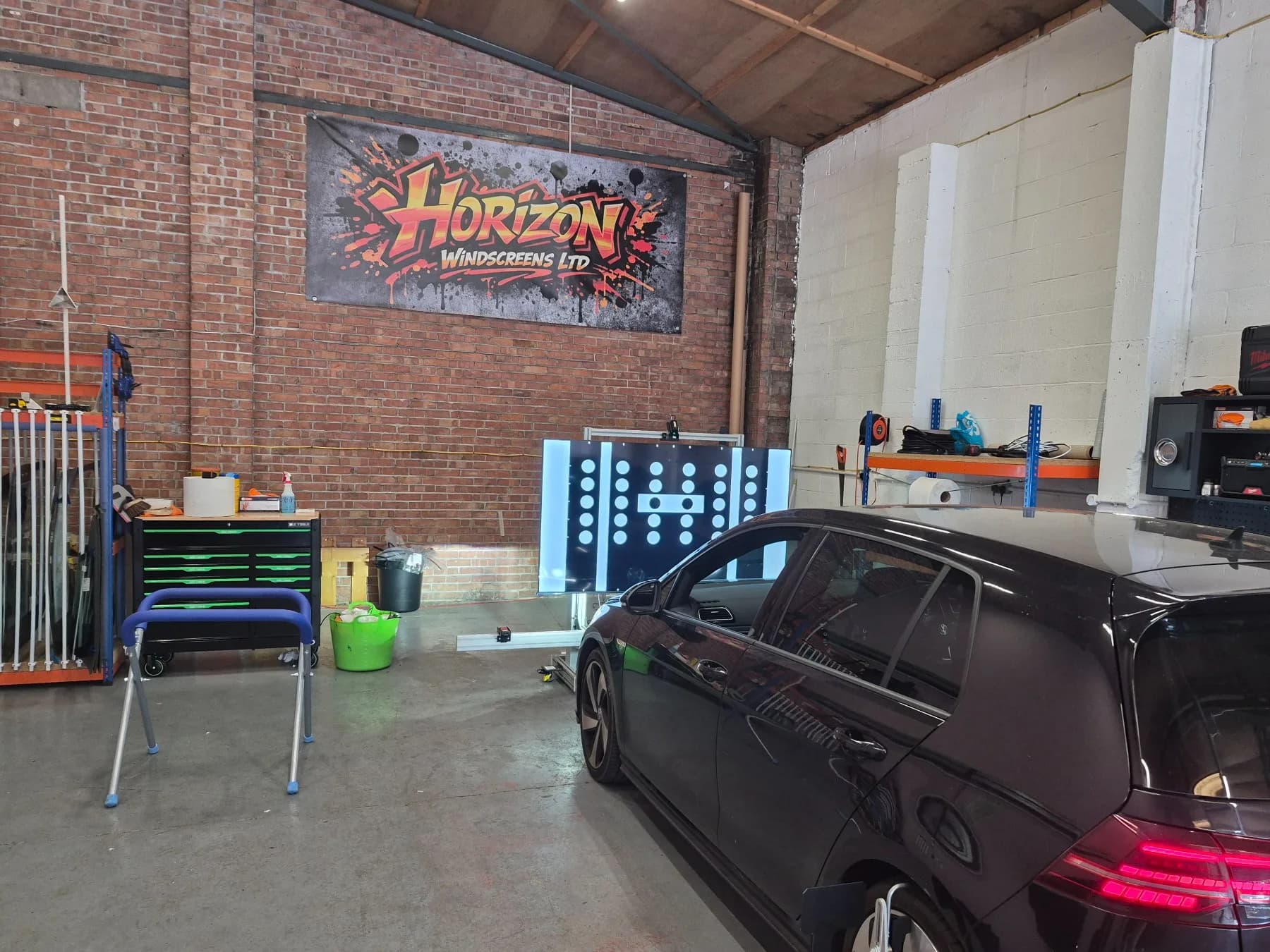
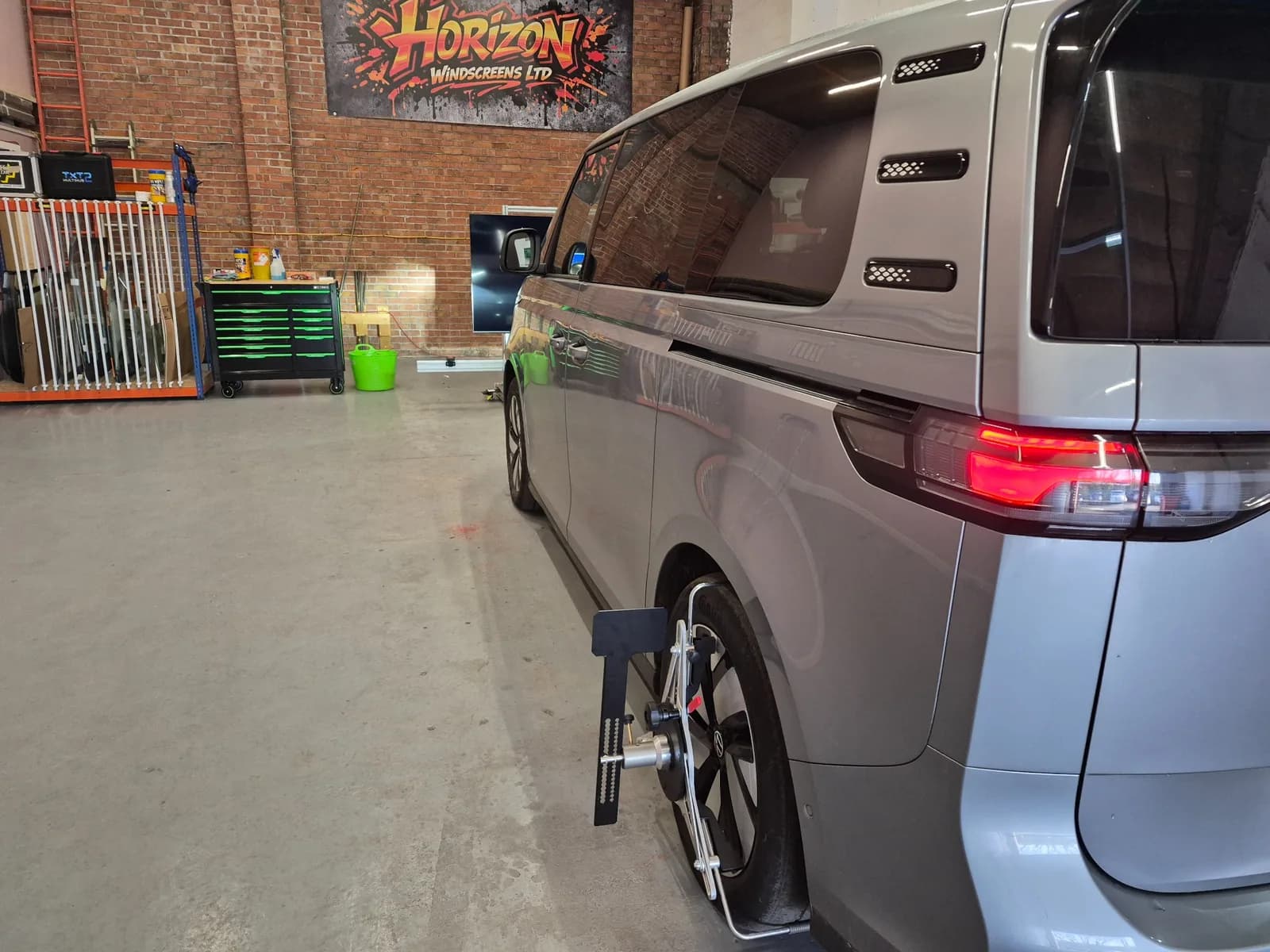
Static calibration is performed at Horizon’s Cardiff calibration facility where controlled setup is required.
Dynamic calibration can be carried out mobile where appropriate, subject to the vehicle procedure and suitable conditions.
Sec. 06 — Workflow
A systematic approach.
- 01ASSESS
- 02PROCEDURE
- 03CALIBRATE / DIAGNOSE
- 04VERIFY
- 05DOCUMENT
Sec. 07 — Integration
Vehicle Glass Cross-Reference
Windscreen-mounted cameras often connect Vehicle Glass replacement and ADAS assessment requirements.
Sec. 08 — Trade
Bodyshops & Repair Professionals
We support accident repair centres, bodyshops, and trade repairers with ADAS assessment and calibration services to help verify vehicle safety systems after collision repair or structural work.
Cross-Reference
Trade Routing Record
ADAS Hub — Frequently Asked Questions
Questions about ADAS.
Do I need ADAS calibration?
Calibration may be required after work that disturbs a sensor's mounting position, such as windscreen replacement, collision repair, or suspension geometry changes. It may also be necessary if a system warning light is present or if the system is behaving unexpectedly. We review manufacturer procedures to determine if assessment or calibration is required for your specific situation.
Does windscreen replacement always require calibration?
If your vehicle has a forward-facing camera mounted to or behind the windscreen, manufacturer procedures often require the camera to be calibrated after the glass is replaced. The new windscreen will sit in a slightly different position to the original, which can change the camera's field of view. We assess the requirement for every vehicle.
What is the difference between static and dynamic calibration?
Static calibration is carried out in a controlled workshop environment, using physical targets positioned at precise distances and angles from the vehicle. Dynamic calibration is carried out by driving the vehicle under specific conditions on suitable roads, allowing the system to calibrate using live data. The required method is dictated by the vehicle manufacturer.
Can calibration be carried out mobile?
Dynamic calibration can be carried out mobile where appropriate, subject to the vehicle procedure and suitable conditions. Static calibration requires a controlled setup, so it is performed at our Cardiff calibration facility. We will advise which approach your vehicle requires.
Can Horizon confirm what my vehicle requires?
Yes. By providing your vehicle registration and details of the work carried out (or the faults present), we can consult manufacturer data to determine whether calibration, diagnostics, or a system reset is the correct next step.
Overall Horizon customer feedback
Overall Horizon customer feedback
5.0 out of 5
154 Google reviews
Ready to arrange ADAS support?
Request a quote and tell us what has happened to your vehicle. You do not need to know which calibration method it requires.