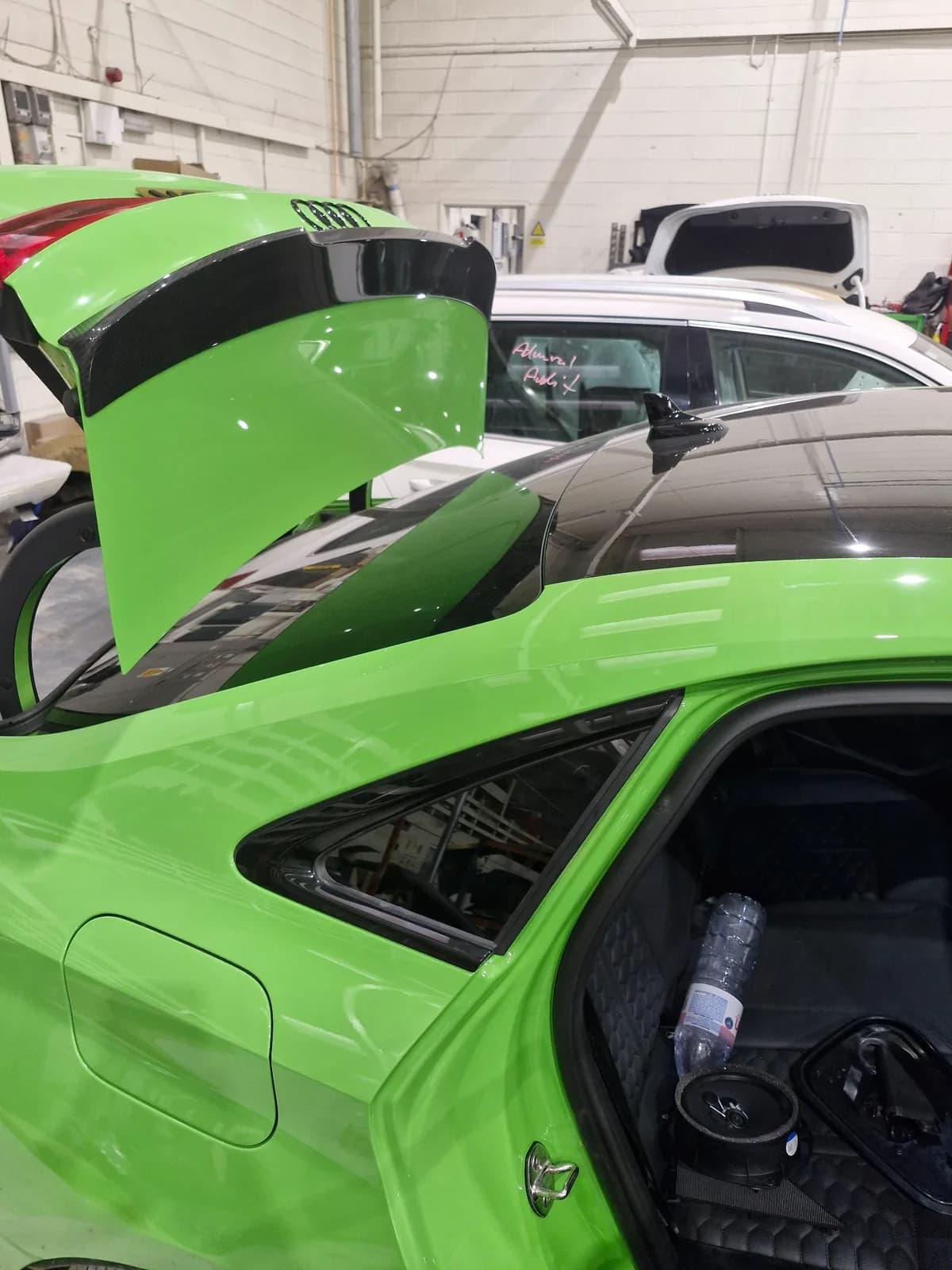
Broken rear quarter glass
Tempered quarter glass shatters when broken — through impact, vandalism or attempted theft. The aperture must be cleared of fragments and old adhesive before the replacement is bonded in.
Rear Quarter Glass
Rear quarter glass is far more than simply another piece of glass.
Modern rear quarter windows may be bonded, encapsulated or opening, and often include privacy tint, heating elements, integrated antennas or acoustic construction. They contribute to vehicle security, weather sealing and overall refinement. Horizon replaces rear quarter glass across Cardiff and South Wales to the original manufacturer specification — bonded correctly, leak tested and with every connected system checked.
Why It Matters
The same principles apply here as on a windscreen or side door glass: the glass is part of a larger system, and the quality of the installation decides whether that system keeps working.
A fixed rear quarter window is one of the smaller, less observed panes on a vehicle — which is exactly why it is targeted in break-ins. Glass bonded correctly into the aperture, to the original specification, restores the level of security the vehicle was designed with.
Bonded quarter glass seals against the body through its adhesive bead; opening quarter glass seals through its frame and rubber profiles. Either way, the seal is only as good as the preparation behind it — and a compromised seal lets water track into panels, carpets and electronics.
Quarter glass sits in the airflow at the rear of the vehicle, where even a small step between glass and bodywork generates wind noise at speed. Correct bead height and glass alignment keep the panel flush and the cabin quiet.
Bonded glass contributes stiffness to the body aperture it sits in. A properly bonded quarter window becomes part of the structure around it — which is why preparation, primer and adhesive standards matter far beyond simply holding the glass in place.
Some quarter glass carries heating elements for demisting. The replacement must carry the same provision, and the circuit must be reconnected and proven to work — a missing or unconnected element is often only discovered the first cold morning after poor work.
On many vehicles, the rear quarter glass carries printed antenna elements for radio, DAB or GPS. Fit plain glass in its place and the vehicle loses reception. The correct part preserves the antenna, and the connections are remade and tested.
Factory privacy tint is manufactured within the glass, not applied as film. The replacement must match the original tint level so the rear of the vehicle remains consistent, looks right and stays as the manufacturer specified.
Acoustic quarter glass uses a sound-damping construction to reduce road and wind noise reaching the cabin. Replacing it with standard glass makes a refined vehicle audibly less so — the specification exists for a reason.
Construction, tint, heating, antennas, encapsulation and fittings all vary between vehicles and even between trim levels. Identifying the exact original specification before work begins is what preserves everything above — just as it does on a windscreen or door glass.
When It’s Needed
Tempered quarter glass shatters when broken — through impact, vandalism or attempted theft. The aperture must be cleared of fragments and old adhesive before the replacement is bonded in.
A bonded panel can loosen where the original adhesive has failed or was poorly applied. Once the bond is compromised, the glass may move, whistle or leak — and rebonding properly is the only lasting fix.
Water in the boot, rear carpets or panel cavities often tracks back to a quarter glass seal. We identify the entry point rather than guessing — and where the glass is the cause, it is removed, the aperture prepared and the panel rebonded.
Laminated or encapsulated glass can delaminate — clouding, bubbling or separating at the edges. Once the construction has failed, its optical, acoustic and security performance are gone and the panel requires replacement.
Excess adhesive, poor alignment, missing primer or the wrong part altogether — previous poor work shows up as leaks, noise and corrosion. Correcting it means removing the glass and starting from a properly prepared aperture.
Where the heating element within the glass itself has failed — rather than the wiring feeding it — the panel needs replacing with heated glass of the same specification, and the circuit proving afterwards.
A quarter window that doesn't match the rest of the vehicle's privacy glass is permanently conspicuous. Replacement with glass at the correct factory tint level restores a consistent appearance.
Rear-end and side impacts frequently damage quarter glass and distort the aperture around it. We assess both — glass replacement only succeeds once the aperture it bonds to is straight, clean and sound.
Our Process
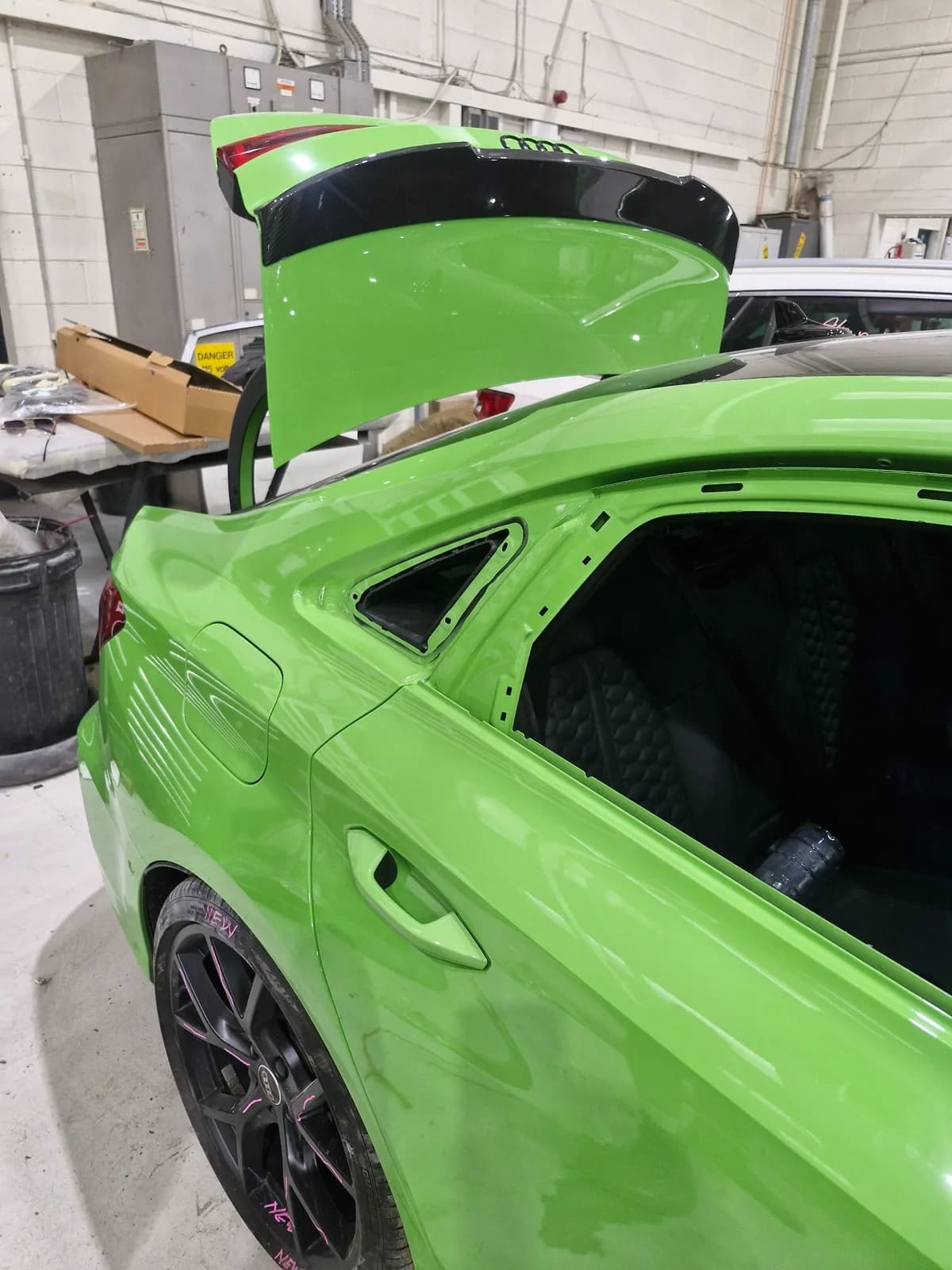
Quarter Glass Removed
Rear-quarter glass removed, exposing the aperture before preparation and installation of the replacement glass.
Glass Specification
Factory privacy tint is manufactured within the glass rather than filmed on afterwards. Matching the original tint level keeps the rear of the vehicle consistent panel-to-panel — anything else is visible from across the street.
Quarter glass with demisting elements must be replaced with heated glass of the same specification. The element is part of the glass itself — it cannot be added afterwards — and the circuit is reconnected and proven before the vehicle is returned.
Printed antenna elements for radio, DAB and GPS are common in rear quarter glass. The correct part preserves the vehicle's reception; a plain substitute silently degrades it. Connections are remade and reception confirmed.
Acoustic construction damps road and wind noise before it reaches the cabin. Where the vehicle was specified with it, the replacement should match — the difference is audible on every journey afterwards.
Bonded and encapsulated quarter glass is manufactured with mouldings, locators and edges designed for a specific aperture and adhesive system. The correct construction is what allows the panel to seat, seal and bond as designed.
Curvature, thickness, tint, heating, antennas and encapsulation all form part of the original specification. We confirm the exact part for the vehicle before work begins — so the finished installation is indistinguishable from factory.
Vehicle Systems
Where driver assistance systems are involved, see our ADAS calibration service for how cameras and sensors are checked and calibrated after glass work.
Heated quarter glass shares its supply with the rear demisting system, and printed antenna elements feed the vehicle's radio, DAB and navigation. Both connect to the glass through small terminals that must be released carefully during removal and remade properly on installation — a strained or corroded connection causes faults that appear long after the work is done.
Reaching a quarter window means removing interior trim, and on many vehicles the surrounding pillars carry side curtain airbags. Trim around these areas must be removed and refitted exactly as the manufacturer intends — with clips replaced where they are single-use — so panels sit tight, nothing rattles, and nothing interferes with how the airbag deploys.
On estates and SUVs, the quarter glass sits alongside the tailgate aperture, its seals and its wiring runs. Work in this area has to respect how those systems drain, seal and move. Where a vehicle also carries rear cameras or sensors nearby, we assess whether any driver assistance systems are affected — the same discipline that sits behind our ADAS calibration work.
It is why every electrical system touched during the job — heating, antennas, lighting and locking where relevant — is tested before the vehicle leaves. Not because faults are expected, but because proving the vehicle right is part of the installation.
Common Issues
Gaps or voids in the adhesive bead let water track into the rear of the vehicle, often far from where it entered. A continuous, correctly profiled bead — and a leak test before handover — prevents it.
Glass sitting proud, sunken or twisted in its aperture disturbs the airflow and whistles at speed. Correct bead height and careful alignment keep the panel flush and silent.
Interior and exterior trims held by snapped or reused single-use clips work loose and rattle. Clips are replaced where the manufacturer specifies and every panel checked for fit.
The wrong adhesive, missing primer or contaminated surfaces produce a bond that looks fine on the day and fails over time. Manufacturer-approved products, applied to a prepared surface, are non-negotiable.
Bare metal scratched during removal and left untreated corrodes invisibly beneath the new adhesive, eventually breaking the seal from underneath. Any exposed metal is treated before bonding.
Heating and antenna terminals left unconnected, strained or corroded cause demisting and reception faults that surface weeks later. Every connection is remade properly and the circuit tested.
A quarter window set unevenly against the bodywork is visible in the panel gaps and reflections. Locators and careful setting put the glass exactly where the manufacturer intended it.
Fragments left in panel cavities and loosely refitted trim create rattles that are notoriously hard to trace afterwards. Clearing the cavity and refitting trim properly costs time — and saves the customer months of irritation.
Who We Support
Bodyshops, fleets and insurers can also work with us directly — see Trade or contact Horizon to discuss regular glazing support.
Fixed and opening rear quarter glass for hatchbacks, saloons and coupés — bonded, encapsulated or framed, in the correct tint and construction for the vehicle.
Larger bonded quarter panels with privacy tint, heating and antenna elements are common on SUVs. Each is replaced to specification with the connected systems tested.
Estate quarter glass sits close to the tailgate aperture and its seals. We replace it with the surrounding sealing and drainage respected, and leak test the result.
Glazed quarter panels and conversion glass for vans and camper conversions, bonded correctly into the aperture with downtime kept to a minimum for working vehicles.
Motorhome and conversion quarter glass varies widely in construction and availability. We identify the correct panel, source it to specification and bond it to the same standard as any passenger vehicle.
Prestige vehicles commonly pair acoustic and privacy quarter glass with bright trim and tight panel tolerances. We source glass to original specification and treat the surrounding trim with appropriate care.
Horizon Insight
Quick Guide
Modern bonded automotive glass relies on meticulous preparation of both the body aperture and the replacement glass. The old adhesive must be trimmed back to a sound, even base; bare metal must be treated so corrosion never starts beneath the new bead; and both surfaces must be primed with manufacturer-approved products that are matched to the adhesive being used. None of this is visible once the glass is in place — which is exactly why it is where poor work hides.
Adhesive selection, bead profile and curing time matter just as much as the glass itself. The adhesive bead must be applied at the correct height and shape so the glass sits at the right depth, compresses the bead evenly and seals continuously around the full aperture. Too little adhesive leaves voids that leak; an uneven bead leaves the glass misaligned against the bodywork; the wrong adhesive, or one rushed before it has cured, compromises the strength of the bond.
Correct bonding restores what the manufacturer designed in: weather sealing that lasts, structural performance in the rear of the vehicle, and a fixed panel that stays silent and secure for the life of the car. It is careful, methodical work — and it is the difference between a replacement that disappears into the vehicle and one that announces itself with leaks, noise and corrosion years later.
Your Questions
Generally, no. Unlike a windscreen chip, damage to quarter glass — whether tempered, laminated or encapsulated — compromises the panel itself, and repair isn't a safe or lasting option. The panel is replaced with glass of the same specification.
On most modern vehicles, yes — the glass is bonded directly to the body aperture with structural adhesive, in the same way as a windscreen. Some vehicles use encapsulated glass with a moulded surround, and some use framed or opening quarter windows. We confirm the construction for your vehicle before work begins, because it determines the whole installation method.
Yes. The heating element is manufactured within the glass, so the replacement must be heated glass of the same specification. The electrical connections are remade during installation and the circuit is tested before the vehicle is returned.
Yes. Where the quarter glass carries printed antenna elements for radio, DAB or GPS, we fit glass with the same antenna provision, remake the connections and confirm reception before handover. Fitting plain glass in place of antenna glass is one of the common causes of mysterious reception problems after cheap glazing work.
Yes. Factory privacy glass is tinted within the glass itself rather than filmed, and we source replacement glass at the correct factory tint level so the new panel matches the rest of the vehicle.
Often, yes. Quarter glass is commonly covered under the glass clause of a comprehensive policy, which may carry a separate excess and typically doesn't affect a no-claims bonus — though terms vary between insurers. We document the work to the standard insurers require and recommend confirming your cover before booking.
A typical bonded quarter glass replacement takes two to three hours including preparation, bonding and leak testing — and the adhesive then needs time to cure before the vehicle is driven, which we confirm based on the adhesive used. Glass with heating, antennas or specific tint may need to be sourced to specification, and we confirm the timescale when you book.
Yes. Every bonded installation is leak tested before the vehicle is returned. A leak found in the workshop takes minutes to address; a leak found months later has usually already damaged trim, carpets or electronics.
Not necessarily — what matters is that the glass meets the original specification: the same construction, tint, heating and antenna provision, manufactured to the applicable standards. We advise honestly on the options for your vehicle, including where original-equipment glass is the sensible choice.
Yes. We replace glazed quarter panels on vans, conversions and campers across South Wales, bonded correctly into the aperture. For working vehicles we keep downtime to a minimum, and for regular commercial work our Trade service may be the right route.
Keep Exploring
Front and rear side door glass replacement, fitted to OE specification with correct regulator alignment and seal.
ExploreRear screen replacement including heated element reconnection and seal integrity, with ADAS assessment where required.
ExploreVehicle glass services for light commercial operators, including cab glass, load area screens and side panels.
Explore★★★★★
5.0
Customer Rating
154 Google reviews
20+
Years Experience
IMI
Director Accredited
ADAS
Specialists
Lifetime
Workmanship Guarantee
Glass installation · current owner
Horizon confirms the exact specification for your vehicle — bonded, encapsulated or opening, privacy, heated, antenna or acoustic — prepares and primes every bonding surface to manufacturer standards, and leak tests the installation before your vehicle is returned.