01
Vehicle Glass
Windscreen replacement, relevant repair, remove/refit, resealing, supply and fit, fit-own arrangements where agreed, and van or commercial glass within Horizon's confirmed capability.
ADAS / Bodyshop — Doc. HZ-ADAS-BS-01
The repairer manages the repair. Horizon manages the agreed Vehicle Glass and ADAS stage.
We support bodyshops and repair professionals with procedure-led glass, diagnostics, calibration, verification and relevant documentation, according to the vehicle and the repair context.
★★★★★
5.0
Customer Rating
154 Google reviews
20+
Years Experience
IMI
Director Accredited
ADAS
Specialists
Lifetime
Workmanship Guarantee
Glass installation · current owner
Sec. 01 — Responsibility
Horizon owns the agreed Vehicle Glass and ADAS scope. We are brought into the wider repair process for the specialist stage that the vehicle, repair context and relevant procedure require.
Manages the wider repair and provides relevant context.
Establishes and carries out the agreed Vehicle Glass / ADAS stage within scope.
Receives the relevant technical status and continues the wider repair process.
This is a working relationship, not a transfer of responsibility for the complete collision repair.
Sec. 02 — Specialist Scope
The actual requirement remains vehicle-specific. This register describes the confirmed areas Horizon can support, not a promise that every item applies to every repair.
Glass, evidence, procedure and outcome.
Replacement, repair, remove/refit, resealing and supply-and-fit work within Horizon's confirmed scope.
Where required by the relevant vehicle and system procedure.
Where required by the relevant vehicle and system procedure.
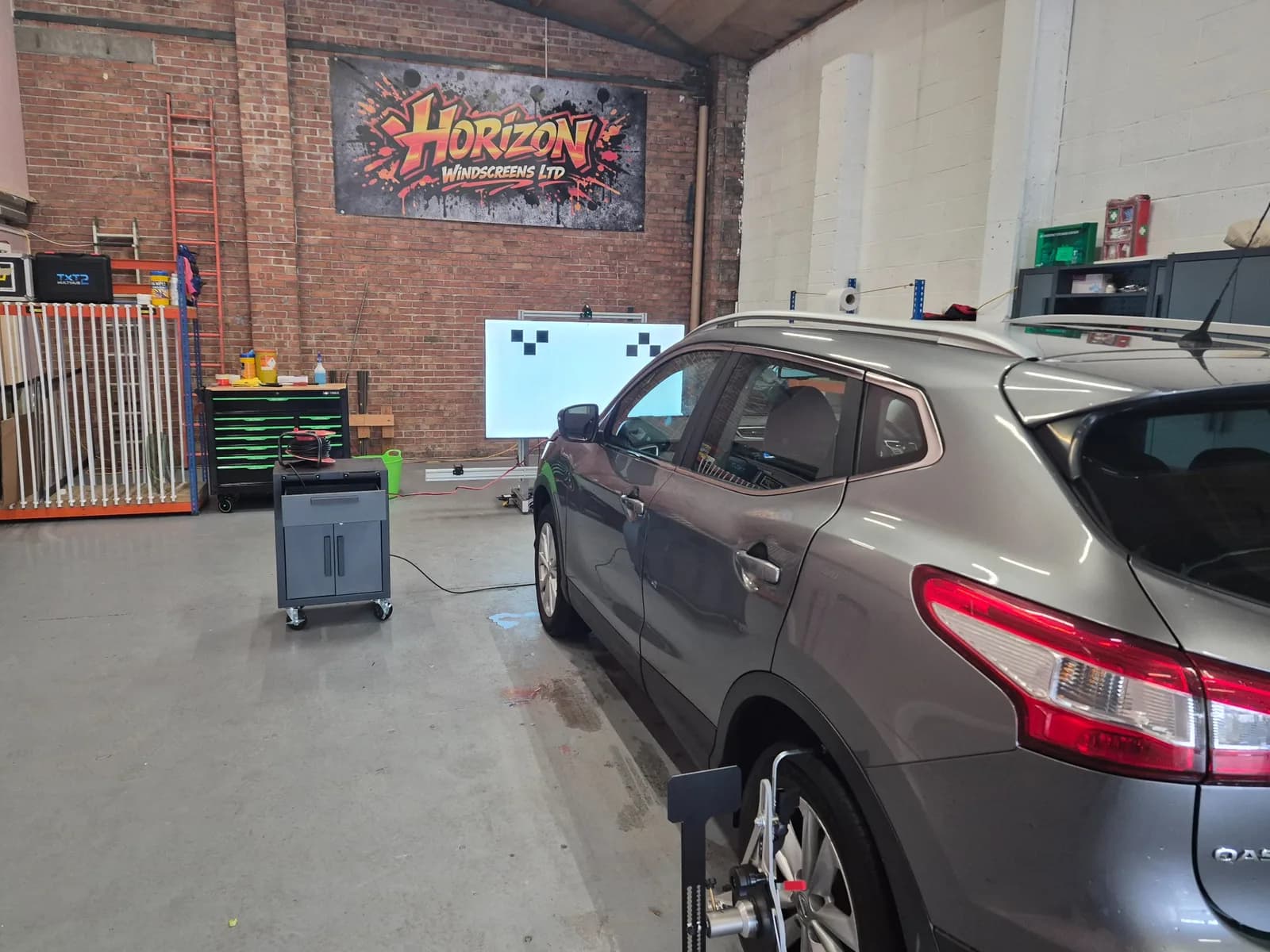
Performed at Horizon's calibration facility in Cardiff.
Mobile where appropriate and where the procedure and conditions allow.
ADAS-focused diagnostics, resets and pre/post scanning where appropriate.
Relevant technical outcome and documentation where applicable.
Sec. 03 — Repair Planning
There is no universal point in the repair for Horizon to become involved. Earlier visibility can help establish the specialist requirement before the vehicle reaches the end of the process.
01Estimating or repair planning
02Once repair scope is known
03Before relevant glass work
04Before calibration
05After relevant components are installed or repaired
06During final technical verification
The better the repair context, the clearer the specialist handoff.
Sec. 04 — Input Register
Useful information helps Horizon identify the relevant Vehicle Glass or ADAS stage. These are context prompts, not a mandatory administrative checklist.
Bring the vehicle story, not just the request.
Make, model, specification or other vehicle detail relevant to identifying the system and procedure.
What has happened, what work is planned and where the vehicle is in the wider repair process.
Relevant parts or components replaced, repaired, removed or refitted.
Glass work already carried out or required, including fit-own arrangements where agreed.
Known system messages, warning lights, fault information or customer-reported concerns where available.
Previous scan information, reports or procedure information where available.
Whether the relevant repair and installation stages are complete or still in progress.
Relevant tyre, loading, battery, suspension, geometry or other condition information where applicable.
Access and location considerations for the agreed glass, diagnostic or calibration stage.
Sec. 05 — Vehicle Condition
Calibration may depend on the vehicle being in the correct condition for the applicable procedure. The factors below are examples, not universal requirements.
A prerequisite is part of the technical result.
Relevant repair work may need to be complete before the ADAS stage can appropriately proceed.
The relevant camera, radar or component may need to be installed and in the required condition.
Tyres, loading, battery/support conditions or other vehicle factors may matter for the procedure.
A geometry-related condition may be relevant to the vehicle procedure. Horizon does not provide four-wheel alignment.
Diagnostic information or an unresolved condition may need attention before calibration.
The calibration method may depend on the required setup, location and conditions.
Where an external prerequisite needs completing first, Horizon can identify that the ADAS stage cannot appropriately proceed until the relevant condition is addressed. Horizon does not provide four-wheel alignment.
Sec. 06 — Incomplete Stage
The right professional outcome is sometimes to stop and identify what prevents the procedure from being completed. Horizon should not be presented as repeatedly forcing a calibration until it passes.
Communicate the condition, information or procedure point that prevents completion.
Address the relevant prerequisite through the appropriate repair or technical route.
Return to the ADAS stage where the vehicle, procedure and conditions allow.
Possible factors include repair condition, component status, diagnostic fault information, geometry-related prerequisites, setup, configuration or another procedure-specific requirement. Horizon does not imply that it resolves every prerequisite itself.
Sec. 07 — Technical Relationship
Where a repair includes relevant Vehicle Glass work, Horizon can manage the agreed glass scope alongside the relevant ADAS stage. This is coordination within scope, not a promise that every job uses every stage.
Windscreen replacement, relevant repair, remove/refit, resealing, supply and fit, fit-own arrangements where agreed, and van or commercial glass within Horizon's confirmed capability.
ADAS-focused diagnostic evidence, resets and pre/post scanning may help establish system status, available fault information and whether further assessment or calibration is appropriate.
Where calibration is required, the method follows the applicable vehicle and system procedure. Static work is at Cardiff; dynamic work can be mobile where appropriate and where conditions allow.
The relevant procedure determines whether the work is glass, diagnostics, calibration, a combination, or another next step.
Sec. 08 — Professional Handoff
Handoff → scope → procedure → return
Repairer provides the relevant vehicle and repair information.
Horizon establishes the agreed Vehicle Glass / ADAS requirement within its specialist scope.
Relevant vehicle and repair conditions are considered before technical work proceeds.
Relevant glass work, assessment or diagnostic activity is carried out where applicable.
Applicable camera or radar calibration is completed where required and where conditions allow.
The relevant outcome and system status are reviewed.
Applicable technical evidence or documentation is retained or provided.
The job returns to the repairer's wider process with the Horizon stage completed or its status clearly communicated.
Not every job uses every stage. Sequence may vary. The relevant vehicle and system procedure determines the technical requirement.
Sec. 09 — Output Register
Relevant technical status goes back to the repairer so the wider repair process can continue with the Horizon stage understood.
Relevant Vehicle Glass, diagnostic or ADAS work completed within the agreed scope.
Calibration outcome or status, including where the technical stage could not yet proceed.
Relevant scan or fault information where applicable.
A relevant report, documentation or technical note where applicable.
A prerequisite, issue or next condition requiring attention where applicable.
Information relevant to the Horizon stage, not a complete repair file or whole-vehicle certification.
The output varies according to the job and vehicle. It is not the complete repair file and does not certify the entire vehicle repair.
Horizon Insight
Professional traceability
Where applicable, relevant records help support repair traceability, the technical handoff and an understanding of what Horizon carried out and what the relevant ADAS stage returned.
Documentation varies according to the job, vehicle and procedure. It supports the agreed specialist stage; it does not replace the bodyshop's repair records or constitute complete repair certification.
Sec. 10 — Ongoing Repair Activity
Horizon can support bodyshops and repair organisations requiring Vehicle Glass and ADAS work across ongoing repair activity. The same principles apply from one job to the next: establish the context, agree the scope, follow the procedure and communicate the relevant outcome.
This page does not promise dedicated capacity, priority booking, account terms, agreed pricing, response times or named commercial relationships. Those details belong to actual professional onboarding.
Visit the broader Trade entry pointBodyshop Support — Frequently Asked Questions
There is no single point for every repair. Earlier visibility can help establish the glass requirement, fitted ADAS systems, likely specialist stage, static or dynamic considerations, prerequisites and the appropriate handoff point. Horizon can become involved during estimating, once repair scope is known, before relevant glass work, before calibration or during final technical verification.
Depending on the job, useful context can include vehicle identification, repair history, parts or components replaced, glass work, known warning or fault information, previous scans, repair status, relevant geometry or alignment status, access considerations and any procedure information already available. Not every item is mandatory for every job.
Where the job and procedure allow, Horizon can manage an agreed Vehicle Glass stage alongside the relevant ADAS stage. This may include windscreen replacement and relevant camera calibration, or glass identification followed by assessment and documentation. The vehicle, fitted system and procedure determine the actual requirement.
Dynamic calibration can be carried out mobile where appropriate and where the applicable procedure and conditions allow. Static calibration is performed at Horizon's calibration facility in Cardiff. Some vehicles may have different or combined requirements.
The appropriate outcome may be to stop and identify what prevents the procedure from being completed. This could relate to repair condition, component status, diagnostic information, geometry-related prerequisites, setup, configuration or another vehicle-specific requirement. Horizon can communicate the relevant status; it does not imply that Horizon resolves every prerequisite itself.
ADAS-focused diagnostics, resets and pre- or post-scanning can be provided where appropriate. Their use depends on the vehicle, repair, system and relevant procedure. Scanning does not replace physical assessment, calibration or repair.
Where applicable, the handoff may include relevant work carried out, calibration outcome or status, diagnostic or scan information, technical notes and a relevant report or record. Documentation varies according to the job, vehicle and procedure and does not replace the bodyshop's wider repair file.
Horizon supports bodyshops and repair organisations requiring Vehicle Glass and ADAS work across ongoing repair activity. Each job remains subject to its vehicle, scope, procedure and operating conditions. Publicly stated capacity, pricing, response times and account terms are not implied by this page.
No. Horizon does not provide four-wheel alignment. Where geometry or another external prerequisite needs attention before the ADAS stage, that condition can be identified and communicated as part of the handoff.
Requirements and available support vary by vehicle and job. Horizon does not advertise universal sensor or module coding or programming. The relevant vehicle procedure and agreed scope determine what can be supported.
There is no universal duration. Timing depends on the vehicle, repair context, parts and components, procedure, conditions, diagnostic findings and any prerequisite work required.
For a defined repair job, request a quote with the relevant vehicle and repair context. For general professional discussion, contact Horizon.