01
Camera
Camera-based systems commonly use visual information from the road environment to support relevant driver-assistance functions.
ADAS Calibration — Doc. HZ-ADAS-CAL-01
Modern vehicles may use cameras, radar and other systems to support driver-assistance functions.
When relevant components, vehicle geometry or system conditions change, assessment and calibration may be required depending on the vehicle and procedure. Horizon provides specialist ADAS calibration and related support.
★★★★★
5.0
Customer Rating
154 Google reviews
20+
Years Experience
IMI
Director Accredited
ADAS
Specialists
Lifetime
Workmanship Guarantee
Glass installation · current owner
Sec. 01 — Orientation
ADAS calibration establishes or verifies the required reference and alignment of relevant sensors and systems according to the vehicle-specific procedure.
Those systems can include forward-facing cameras and radar sensors, but vehicles do not all use the same equipment. The method and requirements depend on the particular vehicle, system and work carried out.
Assessment comes first. The vehicle and its procedure determine what happens next.
Sec. 02 — Assessment Triggers
These situations may call for ADAS assessment. They are reasons to investigate, not automatic instructions to calibrate.
A relevant forward-facing camera or its mounting area may be affected by glass replacement.
Collision work may disturb a sensor, mounting point, vehicle geometry or another condition relevant to the system.
Removing, replacing or disturbing a relevant camera, radar sensor or associated component may call for assessment.
Changes may be relevant where the vehicle-specific procedure connects geometry with the operation of the ADAS system.
A system warning can be a reason for diagnostic scanning and assessment, rather than an automatic instruction to calibrate.
Some repair procedures specify an ADAS assessment or calibration step as part of the work.
Sec. 03 — System Orientation
Camera-based systems commonly use visual information from the road environment to support relevant driver-assistance functions.
Radar systems use radar sensing to support relevant vehicle functions, with requirements that vary by the system and vehicle.
A vehicle may use one category, the other or a combination of systems. Calibration method and requirements are always determined by the specific vehicle, system and procedure.
Sec. 04 — Delivery Methods
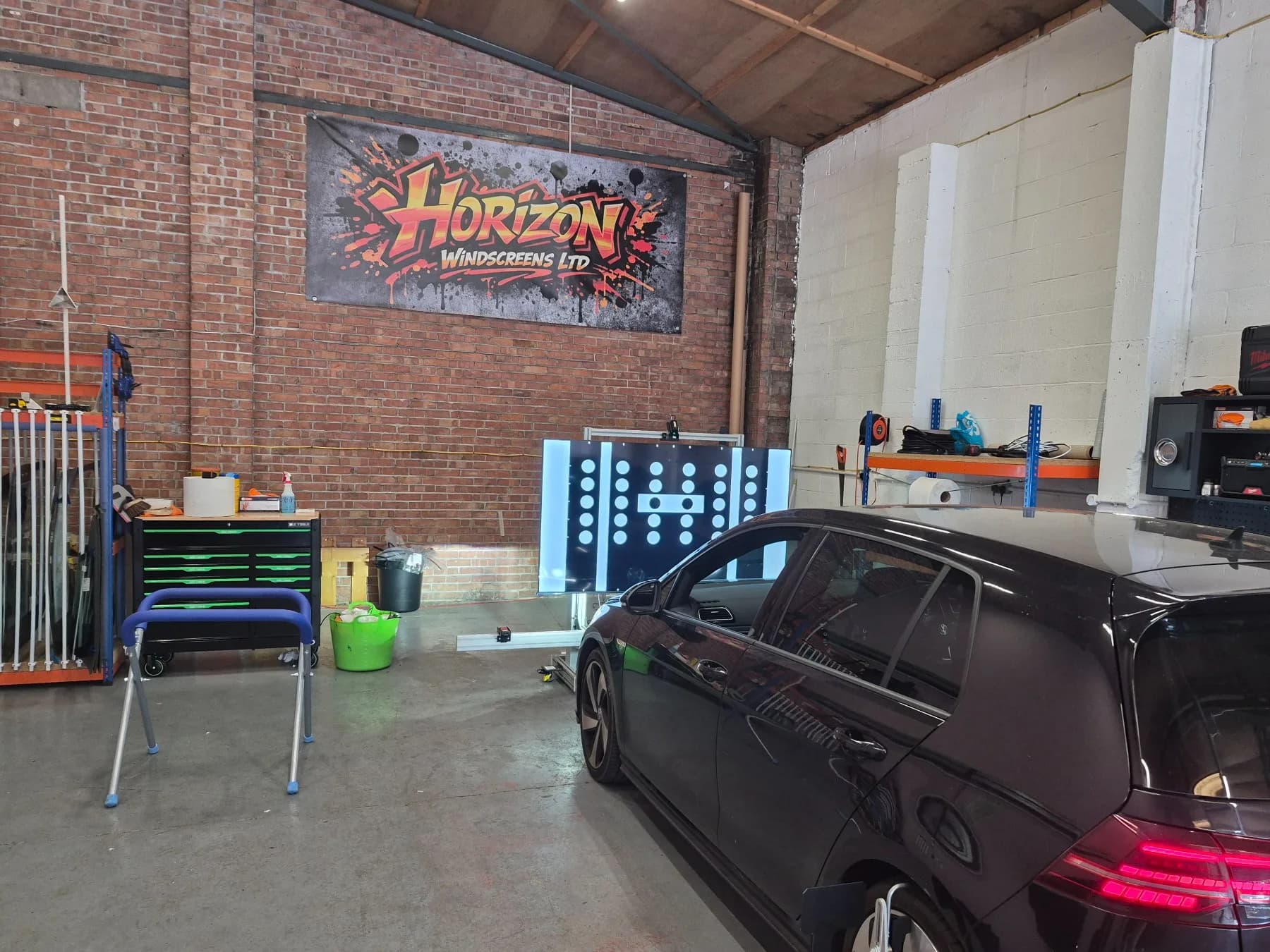
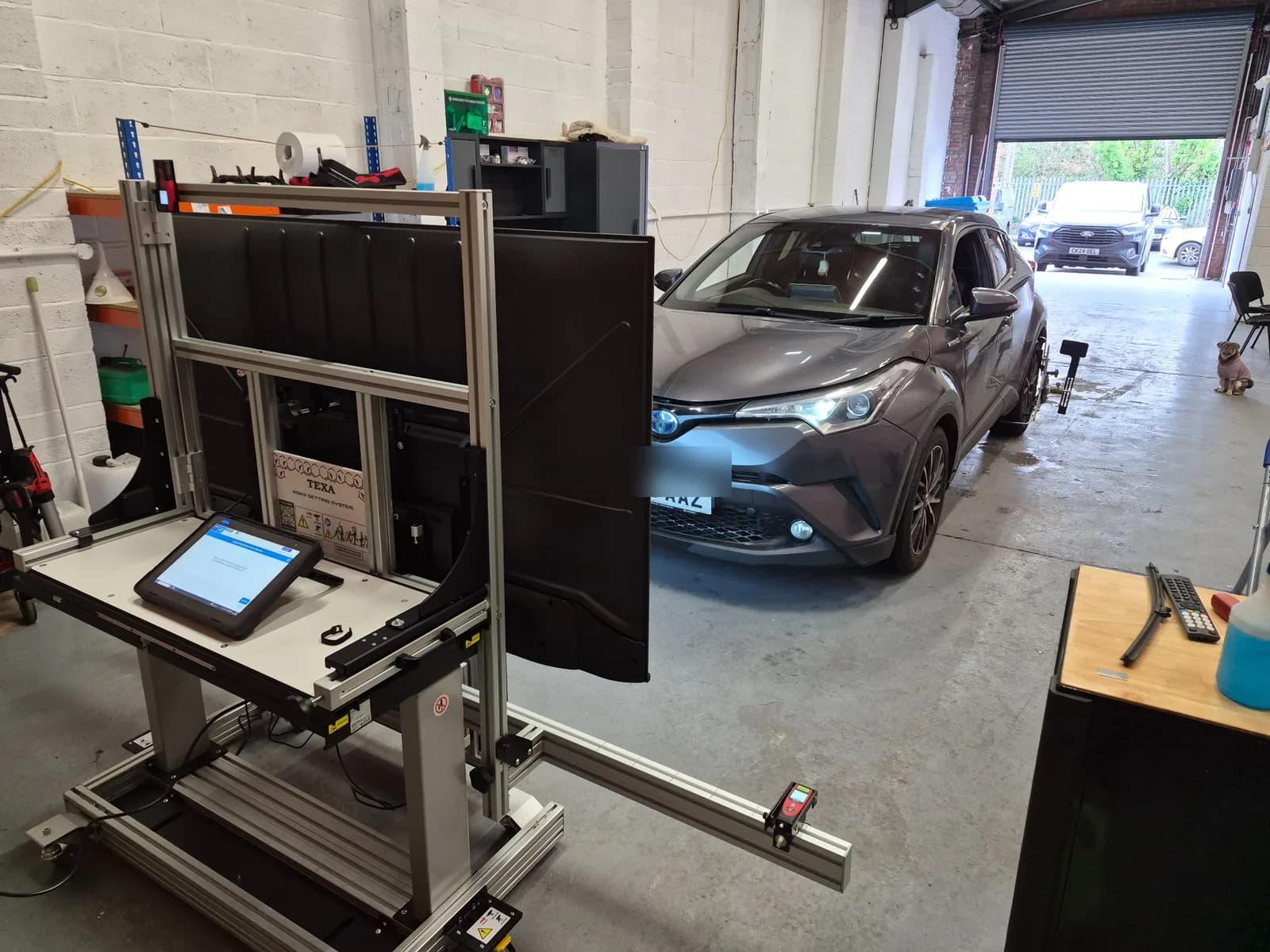
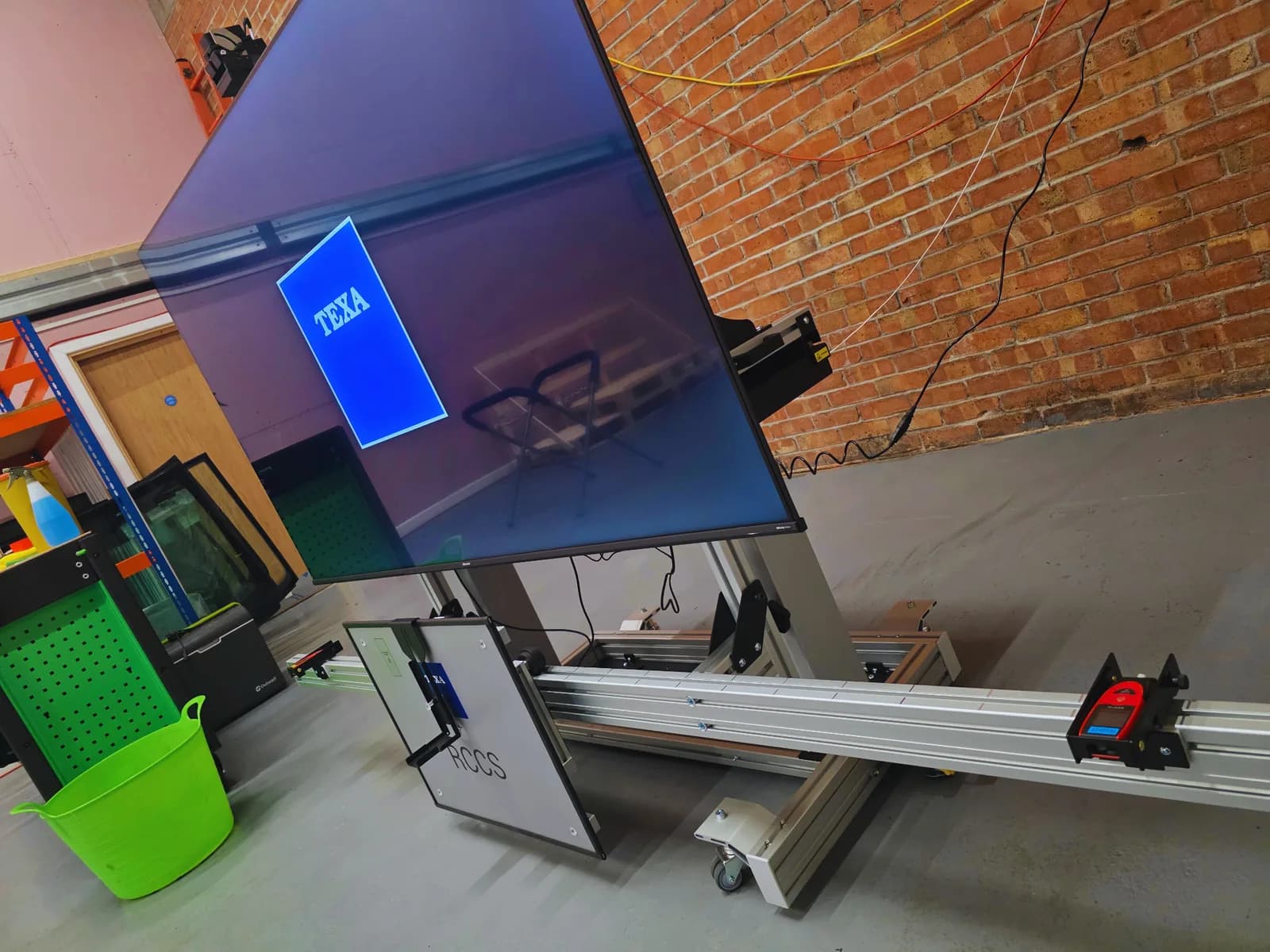
Static procedures can involve the vehicle being positioned in a controlled setup using the required calibration equipment or targets according to the applicable procedure.
Some procedures involve the vehicle being driven under the required conditions so the relevant system can complete its calibration process. This can be carried out mobile where appropriate.
The correct method is determined by the vehicle, system and procedure — not customer preference. Some procedures may involve different or combined requirements.
Sec. 05 — Procedure
Vehicle and system specific
Identify the vehicle, relevant system, repair context and reason for assessment.
Determine the vehicle and system procedure, including the requirements that apply.
Confirm the vehicle and calibration conditions are appropriate for the required procedure.
Carry out the relevant static, dynamic or applicable calibration procedure.
Check the outcome and the relevant system status following the procedure.
Provide relevant calibration evidence or documentation where applicable.
Sec. 06 — Related Assessment
A warning or uncertain system status may need diagnostic scanning or system assessment before the correct next step can be chosen. Calibration is not a general fault repair, and calibration alone is not the answer to every ADAS warning.
Read about diagnostics and scanningSec. 07 — Repair Context
Windscreen replacement
Some vehicles use forward-facing camera systems mounted around the windscreen area. Following replacement, the vehicle-specific procedure determines whether relevant ADAS assessment or calibration is required.
View Vehicle Glass servicesAfter windscreen replacementAccident and body repair
Following collision or body repair, ADAS components or vehicle conditions may need assessment depending on what has been repaired, removed, replaced or adjusted. Horizon supports repair professionals with calibration and related diagnostic and verification work.
After accident repairSec. 08 — Completion Record
Verification and relevant calibration documentation are treated as part of a disciplined technical workflow. What is recorded depends on the vehicle, system and procedure.
Horizon Insight
Calibration record
A calibration report or other relevant documentation is useful because it records part of the work carried out and the outcome checked. The exact format and content depend on the vehicle, system and procedure.
Documentation should be understood alongside the assessment, preparation, calibration and verification steps. A document is evidence of a technical process; it is not a substitute for carrying out the correct vehicle-specific procedure.
ADAS Calibration — Frequently Asked Questions
ADAS calibration establishes or verifies the required reference and alignment of relevant driver-assistance sensors and systems according to the vehicle-specific procedure. Depending on the vehicle, those systems may include forward-facing cameras, radar sensors or other related equipment.
The work carried out, the vehicle and the relevant system procedure determine whether calibration or assessment is required. Windscreen replacement, accident repair, work around a sensor, geometry changes, warning messages and diagnostic faults may all be reasons to assess the system, but none automatically means the same action is needed.
Not every windscreen replacement requires calibration. Some vehicles use a forward-facing camera around the windscreen area, and the vehicle-specific procedure determines whether assessment or calibration is required after the glass is replaced. Horizon can assess the ADAS requirement alongside its Vehicle Glass services.
Static calibration uses a controlled setup with the vehicle positioned according to the required procedure. Dynamic calibration involves driving the vehicle under the conditions required for the system to complete its calibration process. The correct method is determined by the vehicle, system and procedure, not customer preference.
Dynamic calibration can be carried out mobile where appropriate and where the vehicle procedure and conditions allow it. Static calibration is performed at Horizon’s calibration facility in Cardiff, where a controlled setup is required.
No. A warning or fault may require diagnostic scanning or system assessment before the correct next step can be determined. Depending on the situation, that may involve calibration, an ADAS reset where appropriate, further repair or another procedure.
The time varies with the vehicle, system, procedure, preparation, diagnostic requirements and calibration method. Horizon can advise more accurately once the vehicle and the work already carried out have been assessed.
Request an ADAS quote, or use the ADAS Hub to identify the situation-based pathway that best matches your vehicle or repair context.