Chip within repair limits
Repairs are possible up to a defined size — typically around 10mm in diameter for the outer layer. Beyond this, the resin cannot fill the void effectively enough to restore optical clarity or structural integrity.
Stone Chip Repair
A small chip may not always require a replacement windscreen.
Where damage meets repair standards, Horizon provides professional windscreen chip repairs designed to restore strength, improve appearance and prevent further cracking.
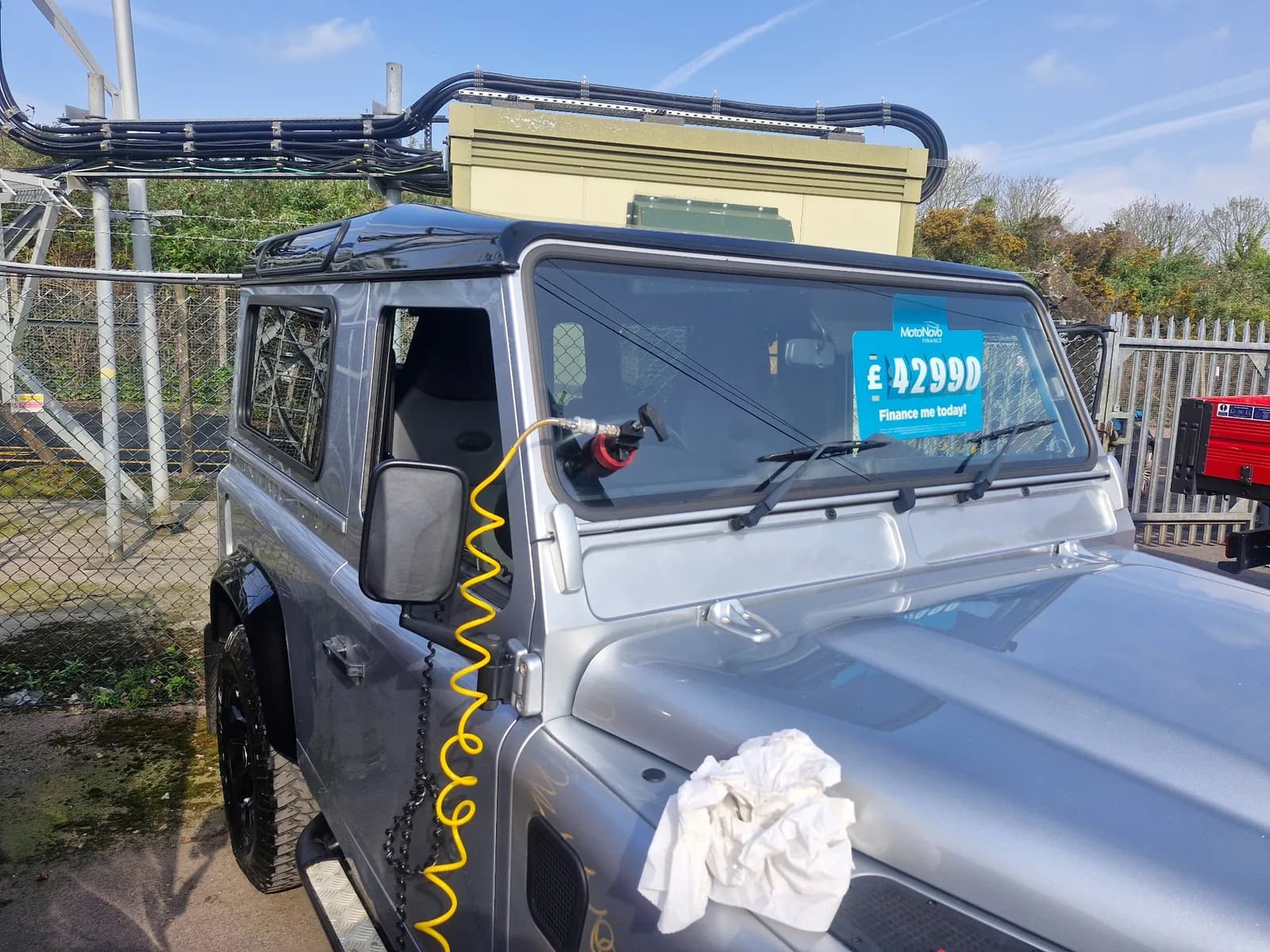
Why It Matters
Glass expands and contracts with temperature. A chip weakens the glass at that point — making it more likely to crack when the vehicle moves from cold to warm or warm to cold.
The vibration of normal driving transmits stress through the glass. Existing damage concentrates that stress, and cracks can extend gradually — or suddenly — during a routine journey.
The vehicle body flexes slightly during driving. The windscreen is bonded to the body and moves with it. Existing damage is a weakness point that can respond to body flex by extending.
Water entering a chip works into the gap between glass layers. In cold conditions, it freezes and expands — widening the damage and making later repair less likely to be successful.
Dirt, road film and polish that enters a chip before repair makes the resin bond less reliable. A chip repaired immediately after it occurs is more likely to produce a clean, strong result.
Even a small chip creates optical distortion in the driver's field of view. If it falls within or near the primary vision zone, it can affect the driver's ability to see clearly — particularly in low light or wet conditions.
Early assessment often provides the greatest opportunity for successful repair.
Assessment Criteria
Before any repair, Horizon assesses the damage against a set of clear criteria. These determine whether repair is genuinely appropriate — or whether replacement is the safer outcome.
Repairs are possible up to a defined size — typically around 10mm in diameter for the outer layer. Beyond this, the resin cannot fill the void effectively enough to restore optical clarity or structural integrity.
Damage within the driver's primary vision zone — typically a 290mm horizontal band directly ahead — is generally not suitable for repair, even if the chip would otherwise qualify. This is a legal and safety consideration.
Chips that have already begun to crack toward the edge of the glass, or that show multiple legs extending from the impact point, may be beyond the range where repair can reliably arrest the damage.
A stone impact typically damages the outer glass layer. Where the inner layer or the interlayer between the two glass sheets has also been affected, repair may not be appropriate and the windscreen's integrity may be compromised.
The glass around the damage must be in suitable condition for repair. Existing cracks, delamination or advanced contamination of the chip can prevent a reliable bond and may mean replacement is the only appropriate option.
Where damage is close to a forward-facing camera or its mounting area, the technician will consider whether repair affects the camera's clear field of view — and whether any further assessment is required after work is complete.
Our Process
When Repair Isn’t Enough
Cracks longer than the length of a bank card cannot be repaired reliably. The resin cannot fill a crack cleanly enough to restore optical clarity or prevent further propagation.
Damage that reaches the edge of the windscreen undermines the structural bond between the glass and the vehicle body. Edge cracks spread readily and cannot be reliably arrested by repair.
Where there are several chips or cracks across the glass — even if individual pieces of damage might otherwise be repairable — the cumulative effect on glass integrity may make replacement the more appropriate choice.
Any significant damage within the driver's primary vision zone requires replacement, regardless of chip size. Optical distortion from repair resin in this area is not acceptable under the relevant standards.
Where there is evidence that the inner layer of the glass has been compromised — or where the windscreen's structural contribution to the vehicle has been affected — replacement is required to restore the vehicle to a safe condition.
Damage to the area where a camera bracket is bonded to the glass, or within the camera's clear field of view, typically requires full replacement to restore correct sensor position and function.
Where repair is no longer appropriate, Horizon will always explain why and recommend the safest solution. Learn about windscreen replacement.
Comparing Options
ADAS & Stone Chip Repair
In most cases, a stone chip repair does not affect Advanced Driver Assistance Systems and no calibration is required after the work is complete.
The exception is where the chip is very close to a forward-facing camera, its mounting bracket, or where the clear field of view through the glass for the camera may have been affected. In these situations, Horizon will advise whether any further assessment is appropriate before the vehicle is returned.
Where repair is not possible and windscreen replacement is required, ADAS calibration requirements are assessed as part of every replacement — in the same way as any other windscreen job.
Horizon Insight
Quick Guide
Many windscreens that could have been repaired at the point of damage eventually require complete replacement after cracks spread — often from temperature change, road vibration or water working into the damaged area.
The window for successful repair is finite. A chip that is repairable today may not be repairable after a cold night, a long motorway journey or a rainstorm.
Early assessment keeps replacement avoidable. Where repair is still appropriate, it is the more cost-effective, less disruptive outcome — for the customer and the vehicle.
Your Questions
No. Whether a chip can be repaired depends on its size, location, depth and condition. Damage in the driver's primary vision zone, damage that has already spread into a long crack, damage to the inner glass layer, or heavily contaminated chips may not be suitable for repair. Horizon assesses every chip honestly and will only recommend repair when it is genuinely the appropriate outcome.
A standard stone chip repair typically takes between 30 and 45 minutes. Unlike windscreen replacement, there is no adhesive curing period — the vehicle can usually be driven away immediately after the repair is complete.
In most cases, a repaired chip will be significantly less visible than before — but it will not be completely invisible. The resin fills and stabilises the damage, improving appearance and preventing further cracking. The exact result depends on the size, age and type of damage. Horizon will give you a realistic assessment of the likely outcome before proceeding.
Most comprehensive motor insurance policies include stone chip repair cover, often at no additional cost to the policyholder. Some insurers offer free chip repair to avoid a more costly windscreen replacement claim later. Check your policy documents or contact your insurer to confirm your cover before booking.
A professionally completed repair stabilises the damage and significantly reduces the likelihood of further cracking. However, in a small number of cases — particularly where the chip had already begun to spread, or where the glass has structural damage — a crack can continue to develop. Horizon will advise on the risk for your specific damage before proceeding.
In many cases, yes. The heating element in a heated windscreen is embedded in the glass, and chip repair does not typically affect it. However, if the chip is close to or has affected the heating element grid, Horizon will assess whether repair remains appropriate or whether other considerations apply.
Yes, in most cases. A chip repair on a vehicle with ADAS does not usually require calibration unless the damage is close to the forward-facing camera or its field of view has been affected. Horizon considers ADAS requirements as part of every assessment and will advise if any further steps are needed.
You can drive to your appointment normally. However, if the chip is large, if a crack has already begun to spread, or if the chip is in your direct line of vision, it is sensible to minimise driving before the repair — and to avoid conditions that might cause rapid temperature changes, such as demisting with hot air directed at the glass.
As soon as possible after the damage occurs. The sooner a chip is assessed and repaired, the less likely it is to have been contaminated by water or dirt, and the better the result is likely to be. A chip that is repairable today may not be repairable after a period of exposure to the elements.
Keep Exploring
OE-specification glass selected for the vehicle, fitted using the correct adhesive system and curing procedure.
ExploreWhere existing glass is correctly fitted but the seal has failed, resealing can resolve leaks without full replacement.
ExploreSupply and fitment of heated windscreen glass, including element connection testing and correct circuit verification.
Explore★★★★★
5.0
Customer Rating
154 Google reviews
20+
Years Experience
IMI
Director Accredited
ADAS
Specialists
Lifetime
Workmanship Guarantee
Glass installation · current owner
If you're unsure whether your windscreen can be repaired, Horizon will assess the damage honestly and recommend the safest option.