Fast demisting
A correctly installed heated windscreen clears frost and condensation across the whole screen in seconds. Uneven clearing after replacement almost always points to the installation, not the glass.
Heated Windscreens
Modern heated windscreens restore visibility within seconds using microscopic heating elements embedded inside the laminated glass.
Replacing them correctly involves far more than fitting new glass. Electrical connectors, rain sensors, ADAS cameras, mirror brackets and manufacturer installation procedures all have to work together exactly as designed. Horizon replaces heated windscreens across Cardiff and South Wales to OE specification, with every electrical system tested before handover.
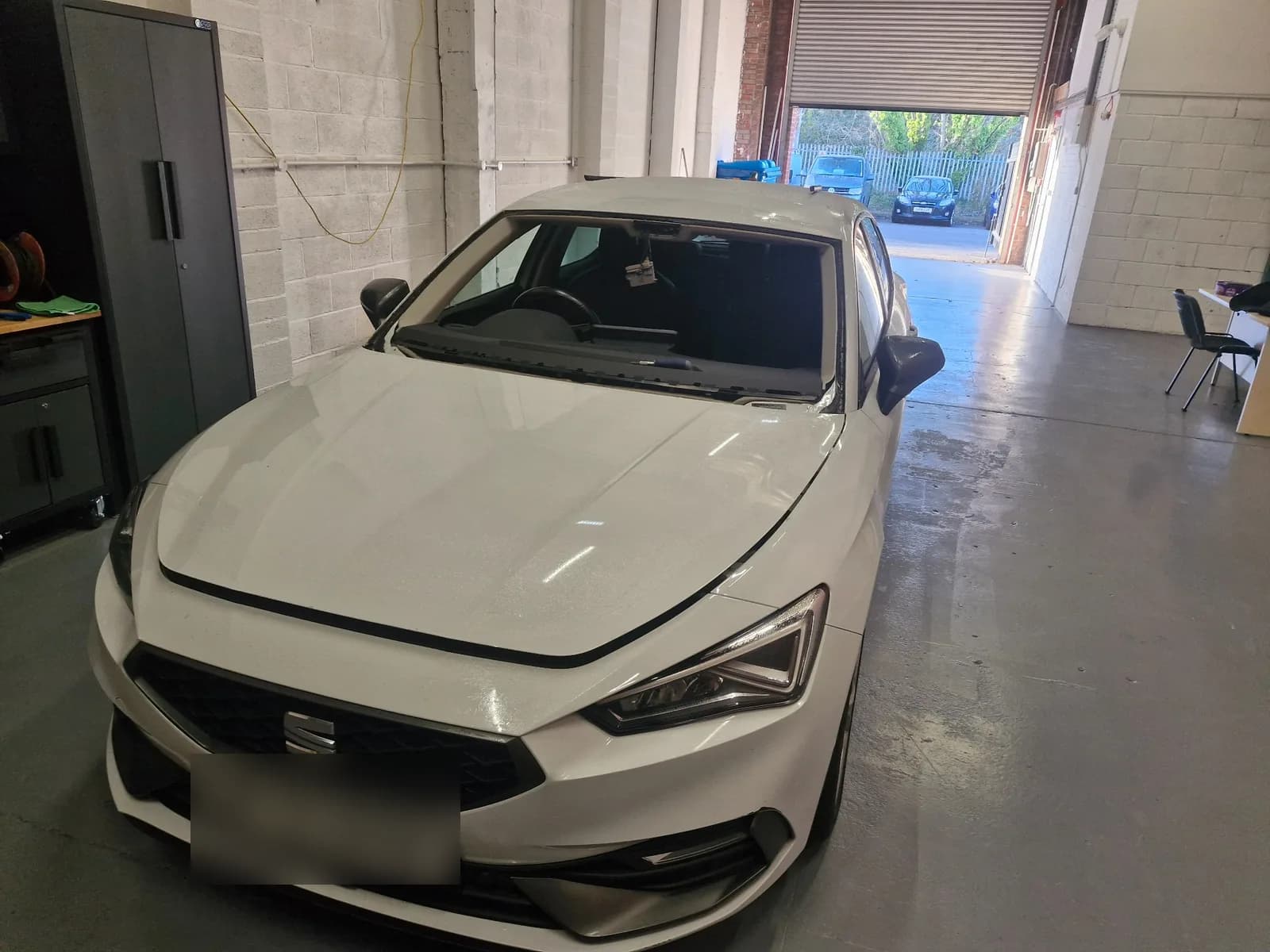
Why It’s Different
A standard windscreen replacement is already precise structural work. A heated windscreen adds a live electrical system, sensors and camera equipment to the same piece of glass — and every one of them has to work when the job is finished. Minor stone damage, meanwhile, can often be resolved with stone chip repair before replacement is ever needed.
A heated windscreen is still laminated safety glass — two layers bonded around a plastic interlayer — but with a heating system manufactured inside it. The glass and the electrical system are one component: neither can be replaced without the other.
The heat comes from ultra-fine tungsten filaments or a transparent conductive coating laminated within the glass. The elements are invisible in normal driving and cannot be repaired if damaged — which is why the correct replacement glass matters so much.
Along the edges of the screen, busbars collect the heating elements into a circuit. They are hidden beneath the ceramic border of the glass, and the integrity of their connections determines whether the screen heats evenly — or at all.
Heated windscreens draw significant current, delivered through dedicated connectors at the base or sides of the glass. Each connector must be released without damage during removal and remade to the manufacturer's procedure on installation.
Most heated windscreens carry a rain sensor optically coupled to the inside of the glass. It must be transferred or replaced with a fresh coupling pad and repositioned precisely, or the automatic wipers misread the screen.
Automatic headlights rely on a light sensor reading through a defined zone of the windscreen. The replacement glass must carry the correct sensor provision, and the sensor must be seated properly against it.
The interior mirror bonds to a bracket on the glass itself — often combined with sensor and camera housings into a single assembly. The replacement screen must carry the correct mounting for the vehicle's exact configuration.
Where a forward-facing camera mounts to the windscreen, its bracket position is engineered into the glass. A bracket fractionally out of position changes what the camera sees — which is why bracket accuracy is treated as a safety issue, not a fitting detail.
Lane assist, emergency braking and traffic sign recognition all read the road through the windscreen. Replacing a heated screen on a camera-equipped vehicle brings ADAS calibration into scope — an inseparable part of the job, not an optional extra.
A standard windscreen is finished when it is bonded and leak tested. A heated windscreen is finished only when the heating circuit, sensors and cameras have all been proven working — testing is part of the installation, not an afterthought.
Every manufacturer defines how its heated screens are removed, installed, connected and verified. Following those procedures exactly is what separates a replacement that works for years from one that fails the first winter.
Why It Matters
A correctly installed heated windscreen clears frost and condensation across the whole screen in seconds. Uneven clearing after replacement almost always points to the installation, not the glass.
The heating exists for one reason: full visibility, quickly, in the conditions where it matters most. Correct installation protects the clarity the system was designed to deliver.
The heating circuit draws real current through a small number of connections. Made to procedure, they last the life of the vehicle; made carelessly, they fail intermittently in cold, wet conditions.
A rain sensor works by reading light through the glass it touches. A fresh coupling pad and precise positioning are what keep automatic wipers responding to actual rain.
Camera-equipped vehicles depend on the windscreen holding the camera in exactly the engineered position. Correct installation — followed by calibration — keeps driver assistance systems trustworthy.
OE-specification heated glass keeps the heating elements effectively invisible and the view undistorted. Inferior glass can show visible element lines, haze or distortion in low sun.
The bond around a heated windscreen seals the cabin and protects the electrical connections at the screen's edge. A continuous, correctly profiled bead keeps both water and corrosion out.
Approved adhesives on properly prepared surfaces, connectors remade to specification, sensors seated correctly — durability is decided in the hours of installation, not the years afterwards.
Correct glass, correct trims and careful workmanship leave the vehicle looking exactly as it did from the factory — no visible sealant, no mismatched mouldings, no scarred paint.
A heated windscreen is a safety system for the worst mornings of the year. Installing it correctly means it performs on the icy morning it was bought for — not just on the day of the fitting.
When It’s Needed
Chips and cracks in the driver's sightline, or damage that has spread through the laminate, mean replacement — and on a heated screen, the replacement must carry the same heating system.
When sections of the screen stop clearing, the elements or their connections have failed inside the glass. The elements cannot be repaired; a heated windscreen that no longer heats needs replacing.
A crack in laminated glass grows with temperature cycles and body flex — and on a heated screen, the heating itself accelerates the spread. Cracked heated glass should be replaced promptly.
After an impact, the windscreen's structural bond and its electrical systems both need assessment. We replace the glass to OE specification and verify every connected system.
Non-heated glass fitted where heated was specified, damaged connectors, missing sensor provision — correcting a poor previous installation starts with confirming what the vehicle should have had.
A leaking windscreen bond lets water reach the very connectors and modules the heated screen depends on. Where the bond has failed, the screen is removed and rebonded on a properly prepared aperture.
Wipers that sweep a dry screen or ignore heavy rain often trace back to a sensor disturbed during previous glass work. Correct re-coupling — or replacement glass with correct provision — resolves it.
Where a camera bracket is damaged, or the vehicle's camera is being replaced, the windscreen is part of the repair. The correct glass carries the correct bracket — and calibration completes the job.
Our Process
The same disciplined process as every Horizon installation — with the electrical system verified before removal, every connector remade to manufacturer procedure, and the heating, sensors and camera proven working before final verification and handover.
The Technology
Ultra-fine tungsten filaments or a transparent conductive coating, laminated between the layers of glass. Effectively invisible in use, and manufactured into the glass — never added afterwards.
Conductive strips along the screen's edges that feed current into the heating elements. Concealed beneath the ceramic border, they are where the electrical and structural sides of the screen meet.
Dedicated high-current connectors link the busbars to the vehicle's wiring. Their condition and seating determine whether the screen heats reliably — they are inspected and remade to procedure on every installation.
An optical sensor coupled to the inside of the glass measures how light scatters when the screen is wet. It requires the correct glass provision and a fresh coupling pad to read accurately after replacement.
Light sensors trigger automatic headlights by reading ambient light through the glass. The replacement screen must carry the correct sensor zone for the system to behave as the manufacturer intended.
Many heated windscreens combine heating with an acoustic interlayer that damps wind and road noise. Where the vehicle was specified with acoustic glass, the replacement should match it.
Head-up displays project onto a windscreen with a special wedge-shaped interlayer. Heated HUD screens must be replaced like-for-like, or the projected image doubles and blurs.
Forward-facing ADAS cameras mount to a bracket engineered into the glass at a precise position and angle. The correct OE screen is what puts the camera exactly where the vehicle's software expects it.
Heating layout, sensor zones, brackets, tints and interlayers all vary by vehicle — sometimes within one model range. We confirm the exact OE specification before ordering glass, never a near equivalent.
The interior mirror, and often the sensor and camera housing with it, bonds to a mounting plate on the glass. The correct mounting system keeps everything seated, aligned and rattle-free.
Vehicle Systems
Where camera-based systems are involved, our ADAS calibration service completes the installation — and our windscreen replacement page covers the structural fundamentals every windscreen shares.
A heated windscreen is a live part of the vehicle's electrical architecture. Its heating circuit is switched and monitored by the vehicle's electronics — on many vehicles through the climate control system, which manages when the screen heats, for how long, and at what load. A replacement screen has to integrate into that circuit exactly as the original did, which is why the electrical system is inspected before removal and verified again before handover.
The rain sensor that drives the automatic wipers and the light sensor that triggers the automatic headlights both read the world through the windscreen. Each depends on the correct glass provision and precise re-installation against the new screen. Disturb either, and systems the driver has stopped thinking about begin behaving unpredictably.
On camera-equipped vehicles, lane assist, emergency braking and other ADAS functions see the road through the windscreen — and through the bracket the new glass holds the camera in. Replacing a heated windscreen on these vehicles is therefore two jobs, not one: the correct glass installed to specification, and the camera calibrated afterwards so its judgements can be trusted.
The result the driver should notice is nothing at all: the screen clears on cold mornings, the wipers respond to rain, the headlights come on at dusk, and the assistance systems behave exactly as they did before — because every one of them was tested before the vehicle left.
Common Issues
Whole zones of the screen refusing to clear usually trace to connectors never remade properly — or non-heated glass fitted in place of heated. Correct specification and correct connections prevent both.
Connectors levered off carelessly during removal crack housings and strain terminals. The damage often shows up weeks later as intermittent heating in cold, damp weather.
A camera refitted to a poorly positioned bracket — or never recalibrated — feeds the vehicle's assistance systems unreliable information. Correct glass and post-installation calibration prevent it.
A sensor re-coupled on an old, deteriorated pad reads the glass incorrectly: wipers sweep dry screens or sit still in rain. A fresh coupling pad and precise seating restore accurate behaviour.
Gaps in the adhesive bead let water into the cabin — and towards the electrical connections at the screen's edge. A continuous bead and a leak test before handover prevent it.
A screen set at the wrong height sits proud of the bodywork and whistles at speed. Correct bead profile keeps the glass flush and the cabin quiet.
Skipped primer, contaminated surfaces or the wrong adhesive weaken the structural bond the windscreen provides. On any windscreen, heated or not, bonding shortcuts are safety defects.
Cheap glass can distort the view, haze in low sun or show visible element lines. OE-specification glass keeps the heating invisible and the optics true.
An installation that half-works fails again and again — each time in winter, each time inconveniently. Remaking every connection to procedure the first time ends the cycle.
Sensors and cameras disturbed without proper reconnection or calibration leave fault codes and warning lamps behind. A correctly finished installation returns the dashboard to silence.
Vehicles We Support
Once a Ford signature, heated windscreens are now fitted across most manufacturers’ ranges. Bodyshops and fleets can work with us through Horizon Trade, and our Knowledge Centre covers the technology in more depth.
Ford's Quickclear system made heated windscreens familiar to UK drivers. We replace Quickclear screens across the Ford range with glass carrying the correct filament layout and connectors.
VW's climate windscreens use a transparent conductive coating rather than visible filaments. Replacement requires the correct coated glass and, on camera-equipped models, calibration afterwards.
Heated windscreens appear across BMW's range alongside HUD and camera systems — often on the same piece of glass. Confirming the exact build specification is essential before ordering.
Mercedes combines heated glass with acoustic laminates, HUD provision and multi-camera ADAS. We replace to the vehicle's exact OE specification and verify every system.
Heated windscreens are common across Volvo's range, working alongside the brand's extensive standard safety systems — which makes correct camera handling and calibration part of every job.
Heated screens have been fitted across Land Rover and Range Rover models for decades. Modern examples pair them with cameras and HUD, all handled to manufacturer procedure.
EVs use heated windscreens deliberately: resistive glass heating clears the screen while drawing far less energy than heating cabin air, protecting winter range. Correct replacement preserves that efficiency.
Hybrids adopt heated screens for the same efficiency reasons as EVs. Their glass frequently combines heating with acoustic and camera provision — all confirmed before replacement.
Heated windscreens are no longer a Ford exclusive — they appear across mainstream and premium ranges alike. Whatever the badge, the discipline is the same: correct glass, correct procedure, everything tested.
Horizon Insight
Quick Guide
The heating elements in a modern heated windscreen are finer than a human hair — tungsten filaments or a conductive coating laminated permanently between the two layers of glass. Nothing an installer does can improve them. What the installer controls is everything around them: the busbar connections at the edge of the glass, the wiring that feeds them, the sensors and cameras that share the screen, and the bond that holds the whole assembly to the body.
That is why two identical heated windscreens can perform very differently after replacement. A connector seated by feel rather than to the manufacturer's procedure may work on the day and fail in the first cold snap — precisely when the system is asked to draw its full current. A rain sensor re-fitted on a tired coupling pad wipes at the wrong moments. A camera bracket a fraction of a degree out of position undermines the driver assistance systems that depend on it.
The discipline is unglamorous: verify the circuits before removal, confirm the exact OE specification, remake every connection to procedure, then prove the heating, the sensors and the cameras all work before the vehicle is handed back. A heated windscreen installed that way disappears into the background of the vehicle — which, for a component the driver relies on every winter morning, is exactly where it belongs.
Your Questions
Minor stone chips away from the heating elements can sometimes be repaired using the same resin process as a standard laminated windscreen. However, the heating elements themselves cannot be repaired — they are sealed inside the laminate during manufacture. If the heating has failed, or damage sits over an element or in the driver's sightline, replacement is the correct course.
Yes, typically. Heated glass is more complex to manufacture, and the screen usually carries additional provision — sensors, camera brackets, acoustic or HUD interlayers — that adds to the part cost. The installation also involves more work: electrical disconnection and reconnection, sensor installation and full system testing. We confirm the exact specification and price before any work begins.
Usually, yes. Most comprehensive policies include windscreen cover that extends to heated glass, though the excess may differ and some policies cap glass claims. We document the work to the standard insurers require; it's worth confirming your excess and any approved-repairer conditions with your insurer before booking.
They can. Elements can be severed by cracks or impact damage, connections at the busbars can degrade, and connectors can corrode or work loose — often showing up as sections of the screen that no longer clear. Because the elements are laminated inside the glass, a failed element means the screen itself needs replacing; a failed external connection can sometimes be resolved without new glass, which is why we inspect the circuit before recommending replacement.
Yes — the heating circuit is reconnected and tested as part of the installation, before the vehicle is returned. What does need time is the adhesive bond: the vehicle must stand for the adhesive's specified safe drive-away time, which we confirm with you on the day. The heating, wipers, sensors and camera systems are all proven working before handover.
On camera-equipped vehicles, yes. The forward-facing camera mounts to the windscreen, so replacing the glass disturbs the camera's precisely engineered position. Manufacturers require calibration after windscreen replacement on these vehicles, and we treat it as part of the job — the installation isn't finished until the camera has been calibrated and verified.
In most cases the sensor unit itself is transferred to the new glass — but never on its old coupling pad. The optical gel pad that couples the sensor to the glass deteriorates and doesn't survive transfer, so a fresh pad is fitted and the sensor is seated and positioned precisely. Where the sensor or its housing is damaged, we advise replacement.
Increasingly, yes — and for a practical reason. Heating the glass directly clears the screen using far less energy than heating the cabin air with a resistive heater, which protects winter driving range. That efficiency logic means heated windscreens are becoming more common as vehicles electrify, not less, and EV screens routinely combine heating with acoustic glass and camera provision.
Keep Exploring
OE-specification glass selected for the vehicle, fitted using the correct adhesive system and curing procedure.
ExploreWhere existing glass is correctly fitted but the seal has failed, resealing can resolve leaks without full replacement.
ExploreWhere the damage type and location allow, chip repair can restore structural integrity without full replacement.
Explore★★★★★
5.0
Customer Rating
154 Google reviews
20+
Years Experience
IMI
Director Accredited
ADAS
Specialists
Lifetime
Workmanship Guarantee
Glass installation · current owner
Whether your heated windscreen has failed electrically, cracked from stone damage or requires replacement following an accident, Horizon installs replacement heated windscreens to manufacturer specification with every electrical system checked before handover.